Archives: Artworks

  • The Window to the Past

    The Window to the Past

    Of an entire house, memory sometimes preserves only the window, and the light that enters through it.

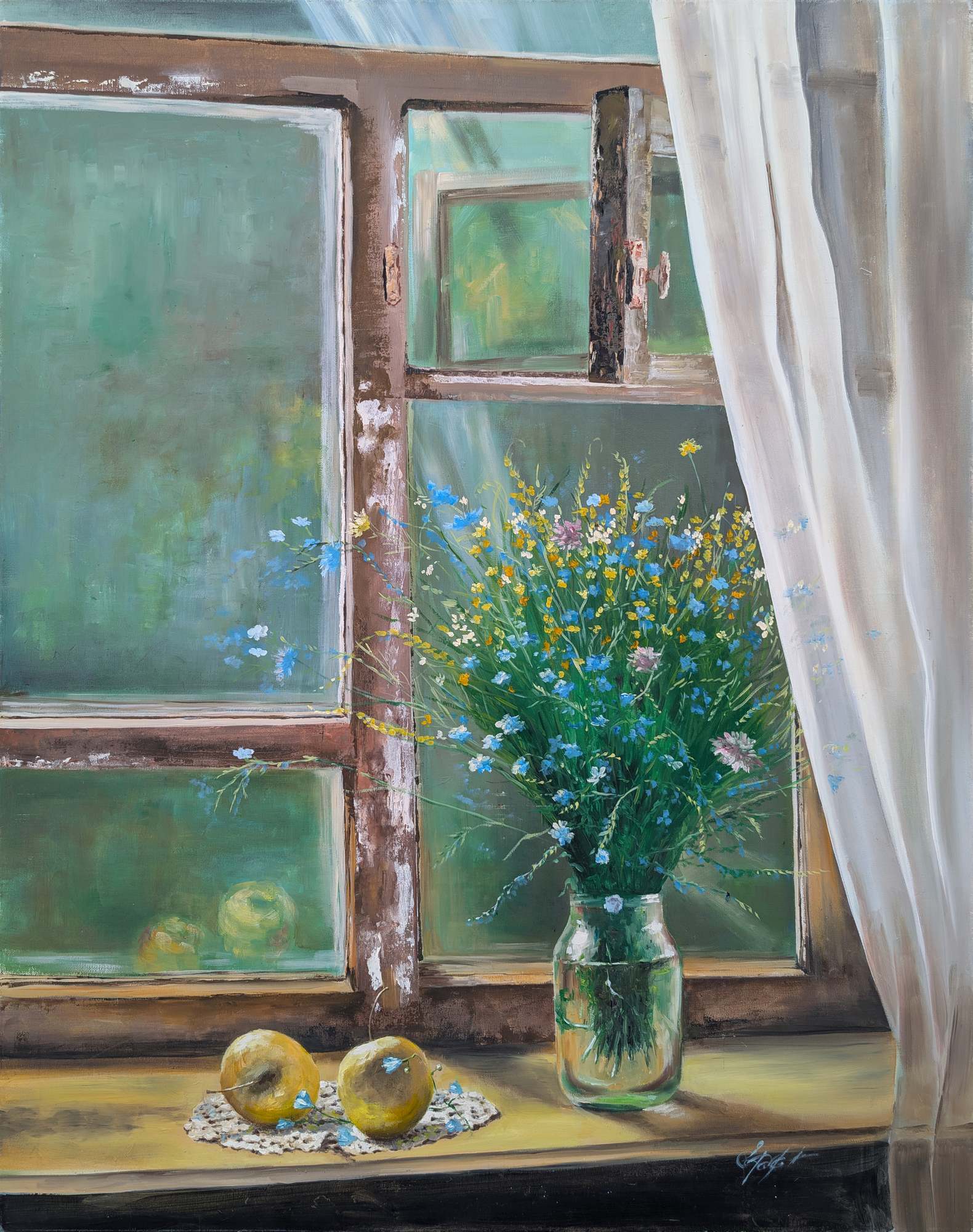
    The Window to the Past is painted from memory, based on the grandmother’s house: an old wooden frame with gently peeling paint, a curtain, wildflowers in a jar instead of a vase, two apples left on the windowsill. Nothing here was copied from a photograph. Everything was reconstructed from the feeling of that summer.

    The light enters from the side and fills the glass with different shades of green, while the windowsill itself remains in shadow and, for that reason, appears more real than what lies beyond the window. Memory decides what remains in focus, while the house in the background recedes into the haze.

    “The house we were born in is more than a body of images; it is also a body of dreams.”
    — Gaston Bachelard, The Poetics of Space
  • Ecological Walk

    Ecological Walk

    A path exists only as far as it has been walked.

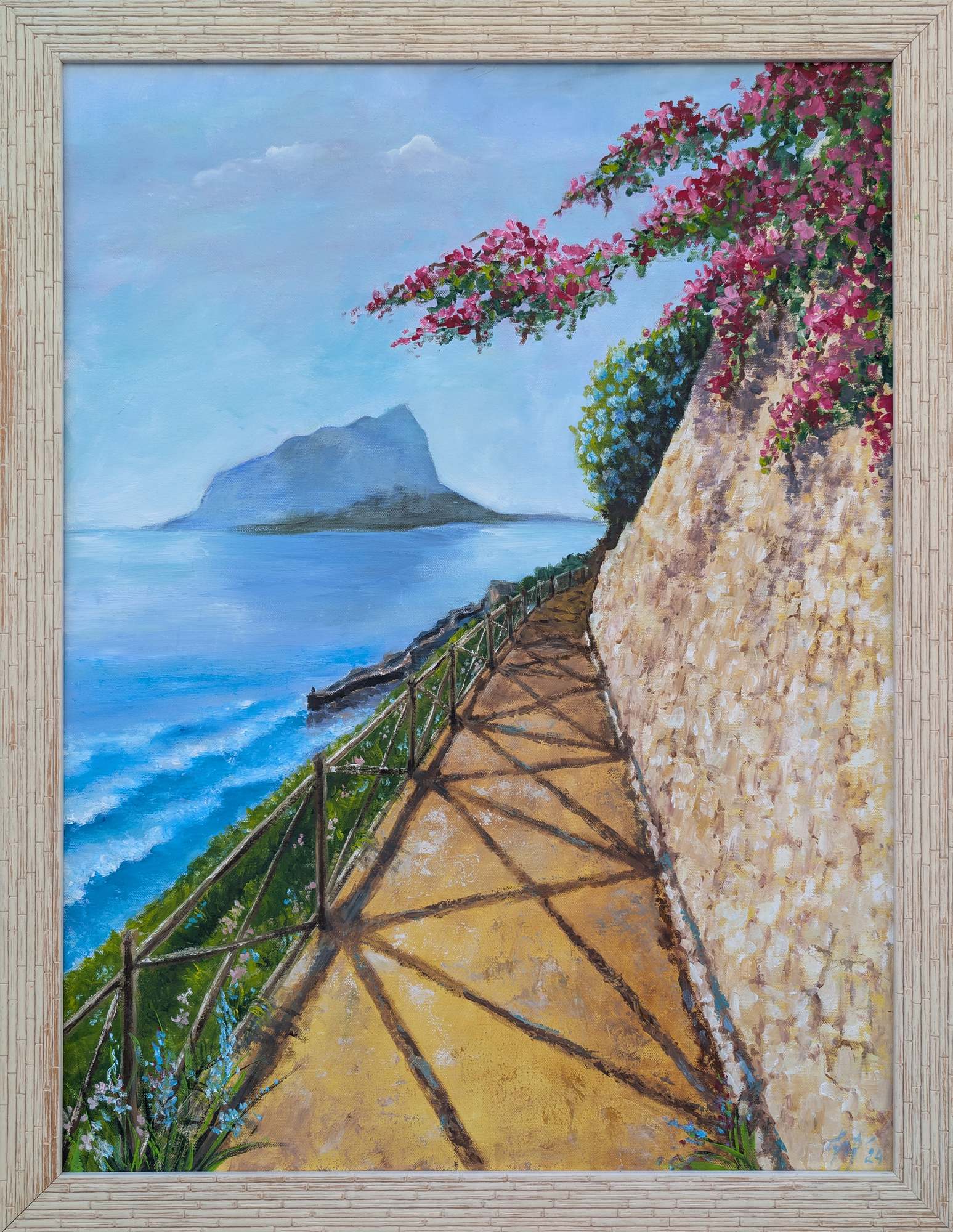
    Ecological Walk depicts a real path in Calpe, facing the Peñón de Ifach, running between a stone wall covered in bougainvillea and the open sea. The path is painted on a diagonal, drawing the eye forward, along the course of the walk itself.

    The bougainvillea and the wall on the right form a kind of shelter, while the sea on the left remains completely open. The path exists precisely in that narrow strip between the two, and that strip is the true subject of the painting.

  • Taurus

    Taurus

    Sometimes this is what dignity looks like.

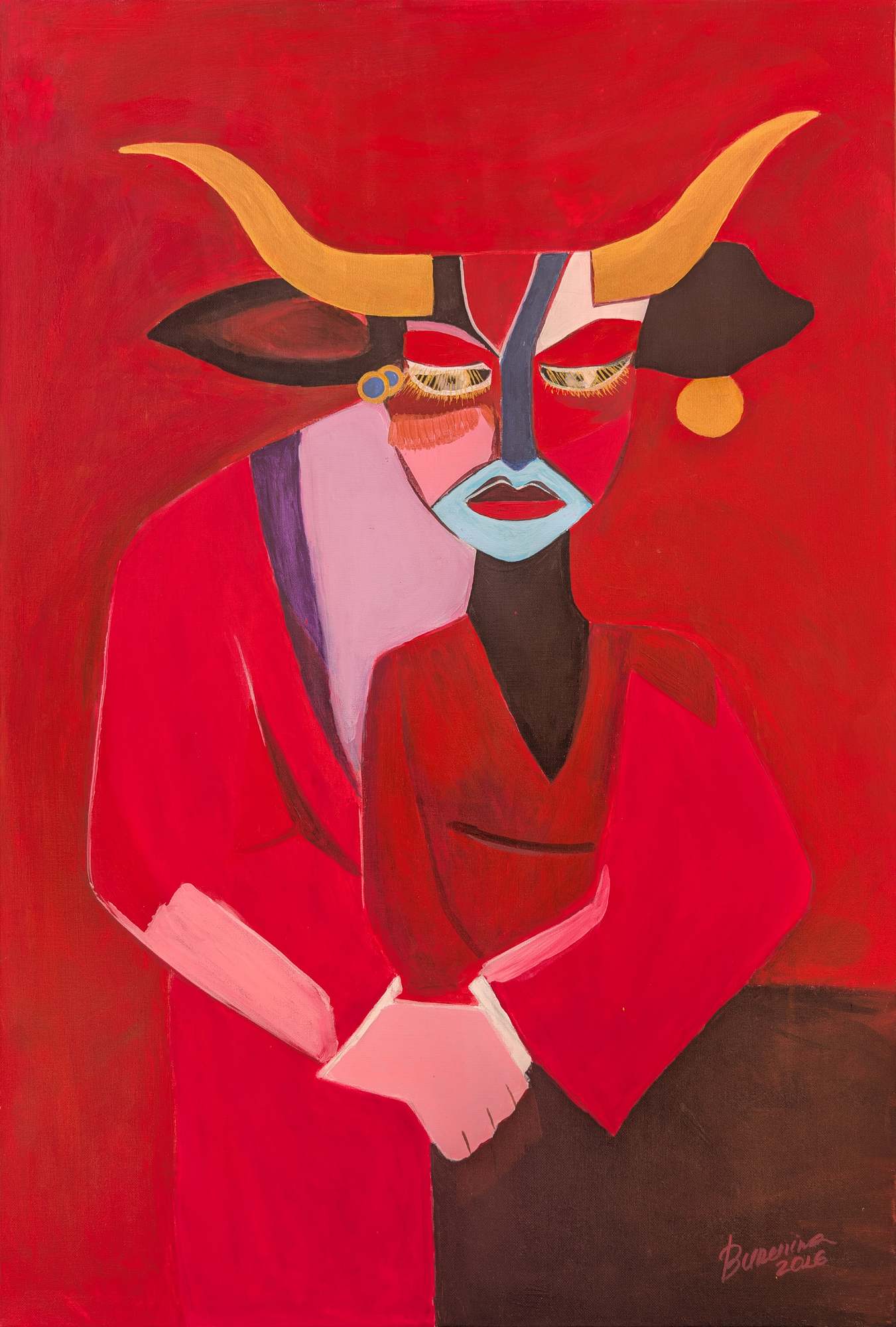
    Taurus opens the Minotaur cycle. The bull and the woman are painted as a single silhouette, the face split into planes of cool and warm red. The pose is composed, hands folded, gaze lowered, with no defiance and no attempt to be liked.

    The painting does not explain where that calm comes from, and it does not have to. The surprise is the viewer’s problem, not the sitter’s.

    “A woman with a bull for a head. She finds this normal. Given a minute, so will you. The rest feel implied.” TAURUS

    Giving the viewer a minute is not a courtesy. It is a test: whoever passes it accepts everything else in the cycle without further argument.

  • Nacre Resurgence

    Nacre Resurgence

    The horizon holds no memory of what has crossed it.

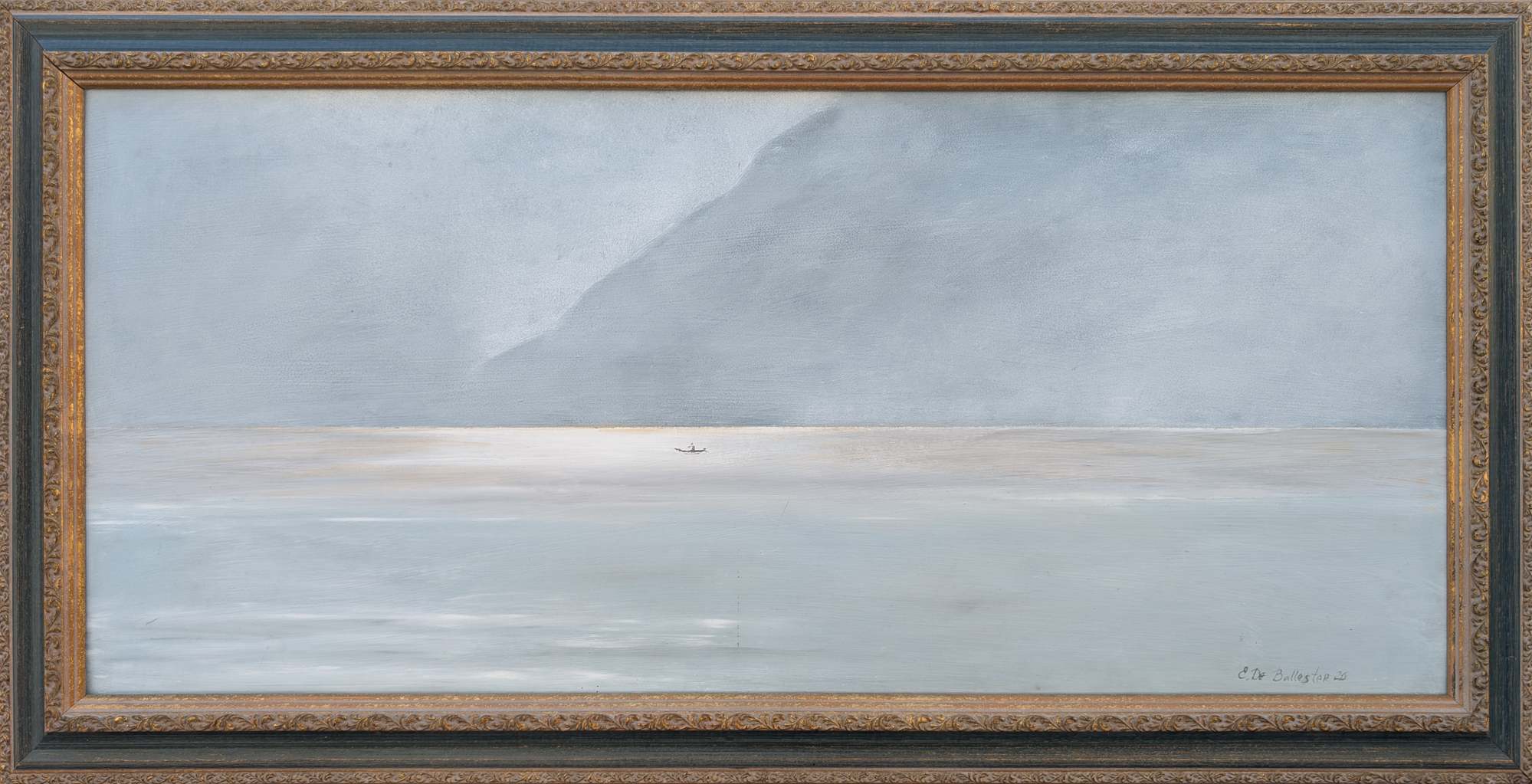
    A lone figure travels in a boat, with nothing else in the painting against which to measure it. In Nacre Resurgence, the sea and sky lose their boundaries and dissolve into a single pale, pearlescent field. The work continues the Resurgence cycle, begun with Amber Resurgence: where that canvas held the warmth of dawn, this one turns toward nacre the soft glow that appears only when light and surface cease to compete for attention.

    The work deliberately refuses to offer direction, destination, or resolution, presenting only the suspended moment and that deeply human urge to fill its silence with a story.

  • Denia

    Denia

    Everything fades into memory, except what remains alive.

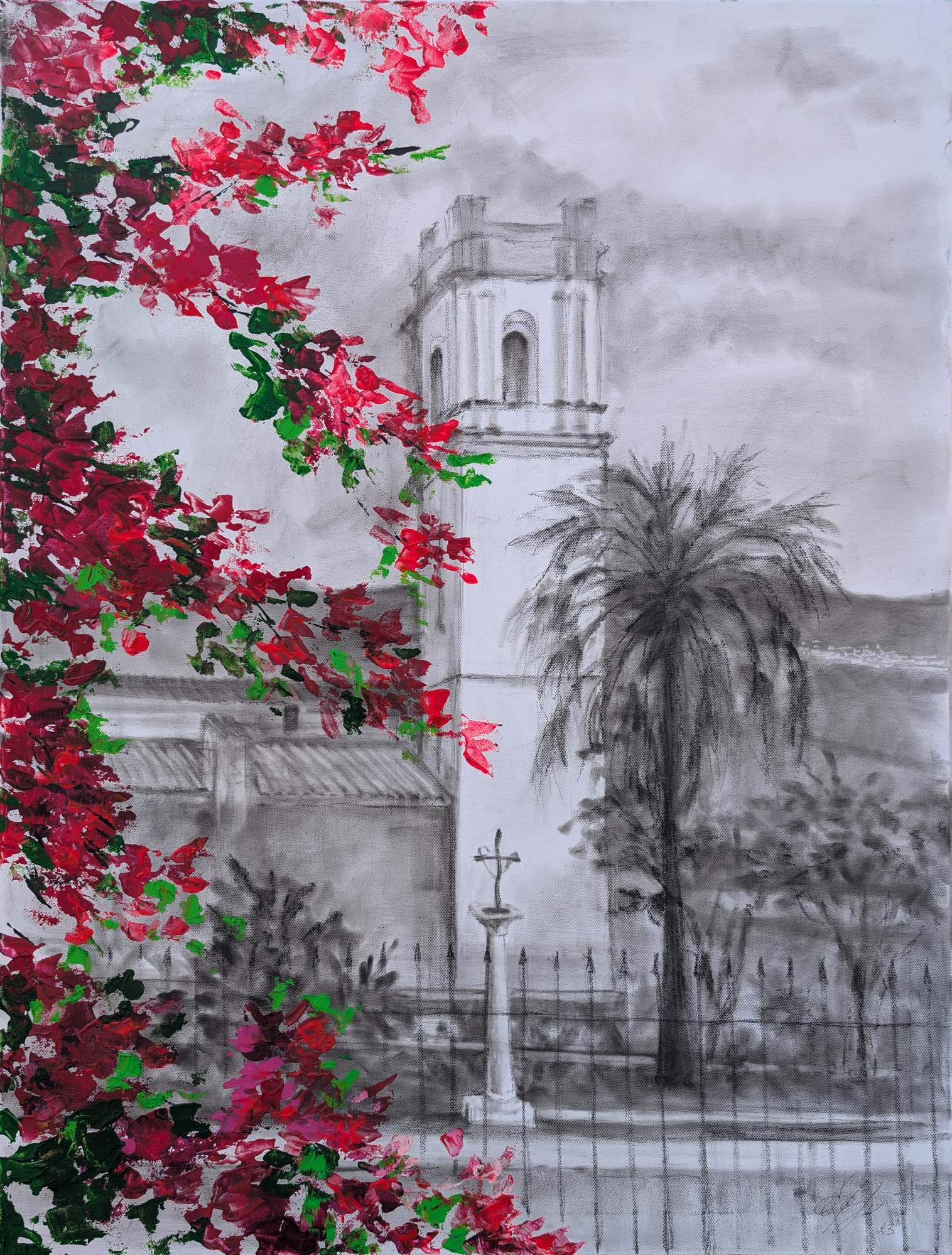
    In Dénia, the town itself – the bell tower, the cross, the iron gate, the palm tree – is rendered in charcoal, blurred, as if it has already become a memory. Only the bougainvillea retains its color: it enters the painting from the left, the only detail that is still happening in the present.

    Dénia is a real town on the Costa Blanca, and the bell tower is recognizable to anyone who has been there. The architecture immediately becomes a backdrop as soon as something living appears beside it.

  • Reunion

    Reunion

    Some reunions don’t need an explanation for why they were apart.

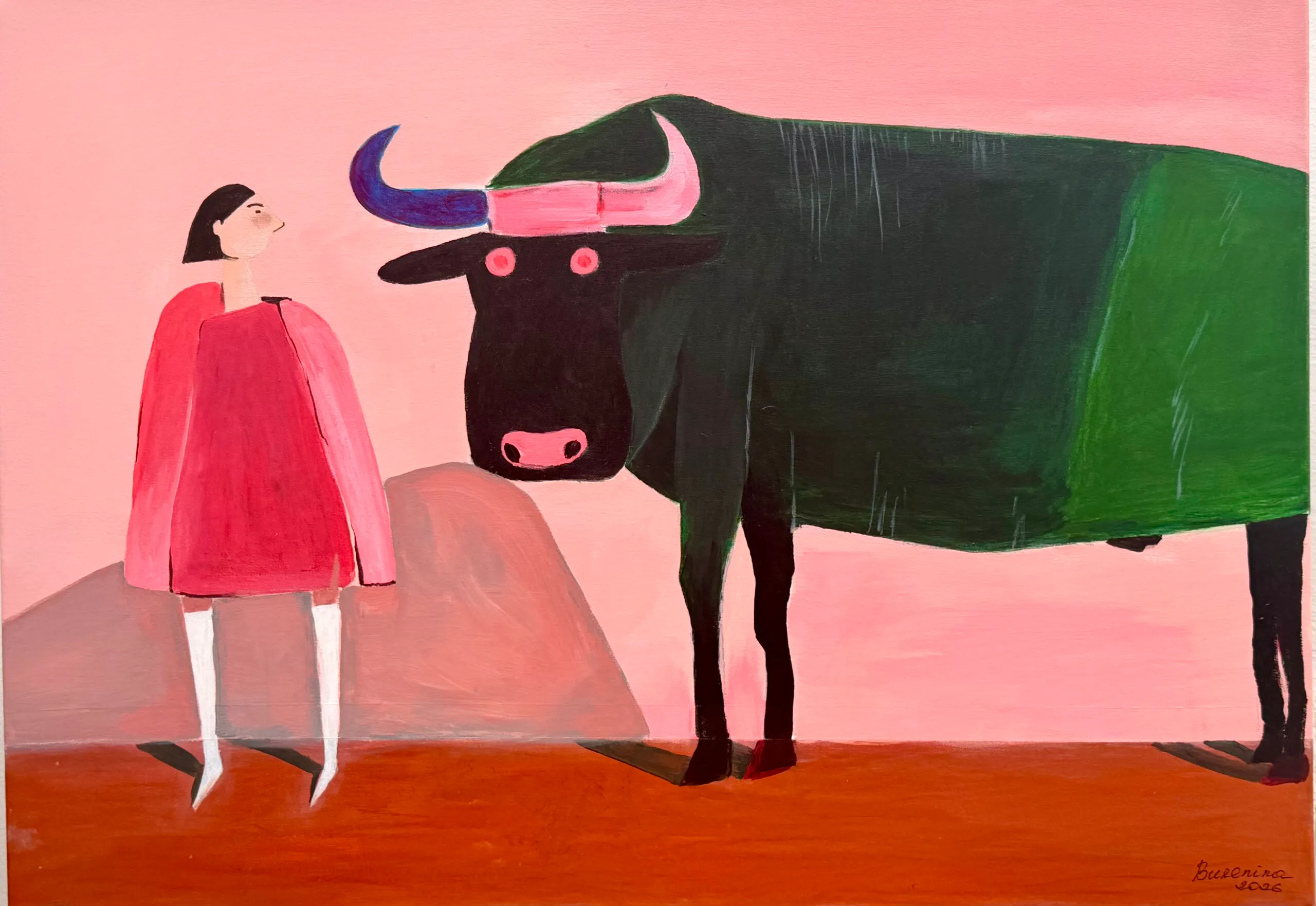
    A girl and a bull, close together in a wide, quiet frame. No conflict, no confrontation. The strangeness of the pairing has already been accepted, long before this moment. What’s left is only the ease between them: a hand near a horn, a head turned toward her without hesitation.

    Reunion continues Natasha Burenina’s Minotaur Cycle, where the mythic and the domestic share the same frame. Here the tone softens: not a monster kept, but someone returned to.

    Her clothes suggest a fight. He is larger than required, and in a good mood.

    Original acrylic painting on canvas.
    Signed on the front and ready to hang.

  • Kin

    Kin

    Kinship is recognized before it can be explained.

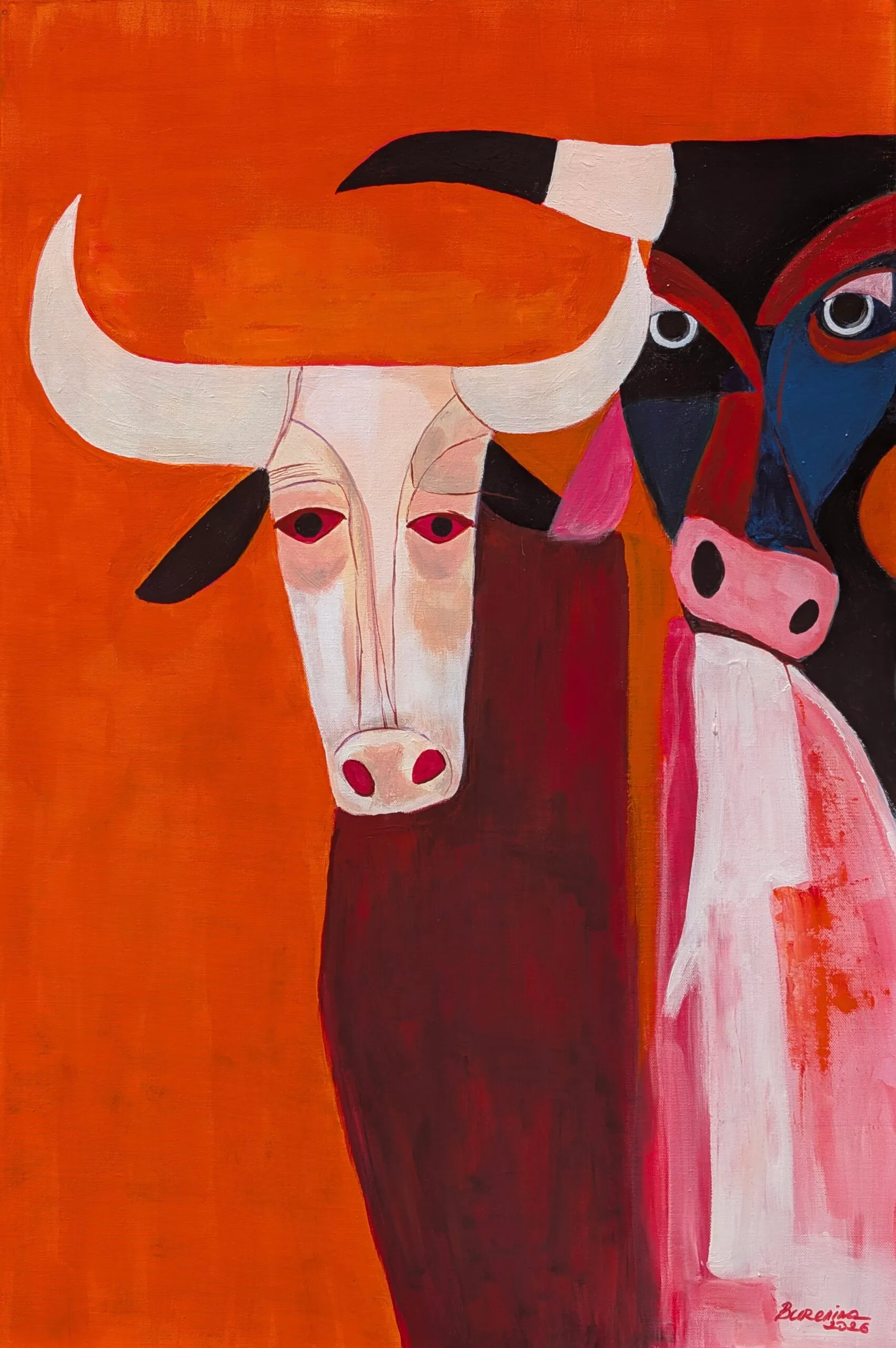
    Kin is a cow and a bull on one canvas, the two of them side by side. Different, and unmistakably each other’s own.

    The painting asks what makes someone yours when everything visible pulls apart. The title does not ask it. It states it.

    “He pressed his neck close against hers.” — The Courtship of Inanna and Dumuzi, Sumerian, c. 2000 BCE

    Kin turns that same recognition toward the viewer: to know something as your own at once, ahead of any explanation. That is usually how collecting actually works, ahead of the reasoning, ahead of the words.